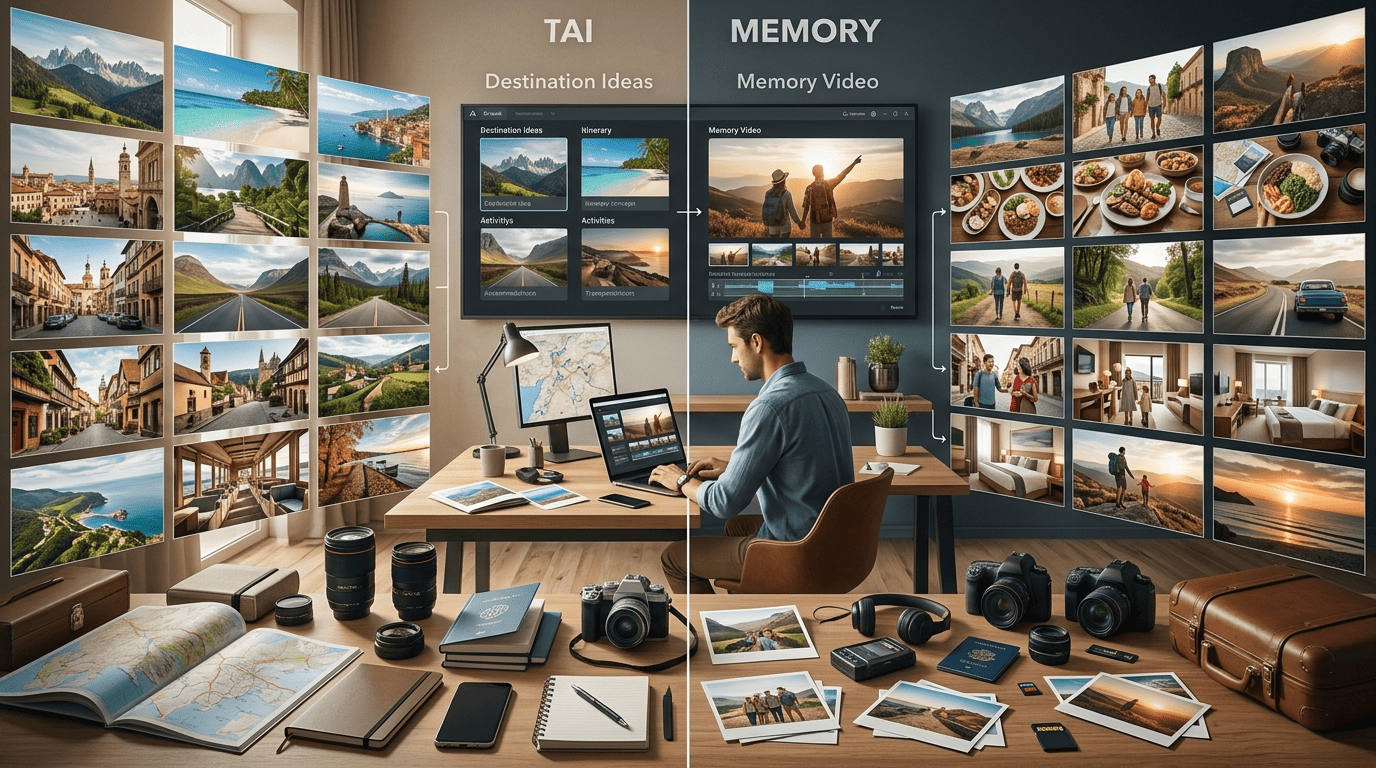
Travel planning has changed significantly in recent years. Travelers no longer rely only on brochures, guidebooks, or recommendations from friends when deciding where to go. They can compare destinations online, explore attractions through photographs and videos, check travel routes and build an itinerary before leaving home.
Yet planning a trip is only one part of the experience. Many travelers also want to preserve what they see after returning home. A beautiful sunset, a family moment at a famous landmark, a scenic train journey, or an unexpected street discovery can become part of a personal travel story.
An AI Video Generator can offer another way to approach both sides of that experience, with Higgsfield helping travelers explore creative video ideas before a journey and transform memories into engaging visual stories afterward. Instead of using it only for entertainment, travelers can experiment with visual ideas before a journey and later turn selected memories into short, engaging videos.
The technology does not replace the experience of actually visiting a destination. Rather, it can help travelers think about how they want to document a trip, organize memories and present them in a more engaging way.
Using Visual Ideas Before the Journey Begins
Planning a trip usually starts with a destination in mind. Travelers may know they want to visit a historic monument, spend time in nature, explore local food, or simply enjoy a few quiet days away from home.
An AI Video Generator can make it easier to think about these experiences visually before the journey begins. A traveler could experiment with the kind of scenes they might want to capture, from an arrival at a destination to a walk through a market or an evening view from a scenic location.
This does not mean the generated video should be treated as a prediction of the actual trip. Travel rarely follows a perfect script. Weather changes, attractions may look different in person and unexpected experiences often become the most memorable parts of a journey.
The value is in preparation. Visual experimentation can help travelers think about what interests them and what they might want to photograph or record once they arrive.
Turning a Destination Into a Personal Story
A destination guide usually provides practical information such as attractions, activities, transportation and places to visit. A personal travel story is different because it focuses on the experience of the traveler.
An AI Video Generator can help explore how separate moments might fit together into a simple narrative.
For example, someone visiting Jaipur might imagine a sequence that begins with arriving in the city, continues through a heritage attraction, moves into a local market and ends with an evening meal. Another traveler might focus entirely on architecture, landscapes, or family moments.
The important part is choosing a story that reflects the actual journey. AI can help with experimentation, but the traveler provides the experiences that give the video meaning.
Making Better Use of Travel Photographs
The typical traveler comes back with dozens if not hundreds of photos. Some are exactly thought out, others are snapshots that were just taken because they caught the eye.
Lots of these photographs are still in a telephone and hardly ever looked at again.
An AI Video Generator can offer an alternative approach to displaying those photos. Rather than a series of individual photos, users can discover a series of related photos in a sequence.
An ocean getaway might be from the trip to the coast, through the hotel, the day on the water, local food, and then the sunsets. An outing with a family could be more about individuals and activities than just those landmarks.
The technology can help with organization of the presentation, the traveler can determine which memories are important.
Exploring Different Ways to Remember the Same Trip
One journey can create several different stories depending on who experienced it.
A family may remember a holiday through funny moments and shared meals. A photographer may remember the architecture and changing light. Someone traveling alone may focus more on quiet observations and unexpected encounters.
An AI Video Generator allows travelers to experiment with these different perspectives.
The same collection of photographs could potentially support a short family recap, a destination focused video, or a personal visual diary. This flexibility can be useful when travelers want to share the same journey with different audiences.
Rather than producing one generic video, they can think about what makes each version meaningful.
Preparing a Simple Visual Plan for a Trip
Professional filmmaking equipment is not a necessity when traveling to make a memorable record of a trip. Using a phone camera and a bit of planning can be all that’s needed.
Travelers can determine what they want to capture as they get ready to leave. This could be arrival, accommodation, must see experiences, local experiences, food, transportation, and one or 2 spontaneous moments.
An AI Video Generator can aid this planning by allowing users to visualize and brainstorm the elements that might come together to create a video.
It’s not about catching all of the minutes. It can be distracting to be constantly filming. It is better to notice a handful of real moments and stay with them and not the rest of the journey.
Preserving Moments That Might Otherwise Be Forgotten
Travel memories are often connected to small details rather than famous attractions.
It might be the sound of a busy street, a conversation with a local person, a train ride through the countryside, or a quiet morning before other visitors arrive.
An AI Video Generator can help travelers think beyond the standard “best places to visit” approach and create a more personal record.
For example, a traveler could combine photographs of a destination with short clips showing the atmosphere around them. The result can become less like a checklist of attractions and more like a memory of how the trip felt.
That distinction matters because the most valuable travel videos are not always the most polished ones. They are often the ones that bring back a specific feeling.
Creating Short Videos From Longer Journeys
Long trips can be difficult to summarize. A week-long holiday may include several destinations, different hotels, numerous activities and hundreds of photographs.
Trying to include everything can make a final video confusing.
An AI Video Generator can be useful when travelers want to experiment with shorter versions of a longer journey. One video might focus on the overall trip, while separate versions could highlight food, landscapes, family moments or specific destinations.
This approach also makes sharing easier. Friends and family may prefer a short summary rather than watching every photograph captured during the trip.
The traveler can decide what deserves attention and what can remain in the private photo collection.
Exploring Travel Experiences Before Spending Money
Visual planning can also help travelers think more carefully about what they actually want from a trip.
Someone considering an adventure destination may want to imagine the type of scenery and activities involved. A person planning a cultural trip may be more interested in architecture, museums and local traditions.
An AI Video Generator can provide a creative way to explore these possibilities before finalizing an itinerary.
It should not replace reliable travel information. Generated visuals may simplify or exaggerate what a real location looks like. Travelers should still confirm opening hours, ticket information, transportation, weather conditions and other practical details through trustworthy sources.
The visual exercise is best treated as inspiration rather than a factual travel guide.
Adding Personal Details Makes the Result More Meaningful
While technology can help to arrange the visuals, personal information is the thing that brings reality to a travel video.
A traveller may recall the reasons for selecting a specific restaurant, how a particular view was more interesting than anticipated, or how the weather affected the day’s activities.
Those details can be presented with captions and narration, pictures, or short clips.
If you’re looking to try out the benefits of AI in visual storytelling and alternative modes of memory presentation, Higgsfield is a destination for those who want to do so.
Also it can be helpful in the experimentation phase, when one wants to witness the visualisation of a travel concept as a short sequence.
The purpose should be maintained as private. The closer it’s to the real traveller and the real experiences, the more memorable it is going to be.
Keeping Travel Videos Authentic
AI assisted visuals can look impressive, but travelers should be careful not to let generated material replace what actually happened.
If a generated scene makes a destination look dramatically different from reality, viewers may receive the wrong impression. That can be particularly problematic when a video is being used to share travel information with other people.
This is best considered as a creative aid rather than a substitute for firsthand experience.
Travelers should clearly distinguish between real photographs or footage and material created or modified with AI when that distinction could matter.
Authenticity does not mean avoiding technology. It means using technology without losing the connection to the real journey.
Making Family Travel Memories Easier to Share
When the family is going out as a group, there is a lot of media created, as there are multiple people who are taking photos and videos.
Families can gather the most important moments making a shorter shared story rather than having everyone send hundreds of files.
At the creative end of storytelling these memories can be put together in a coherent order with the help of an AI Video Generator.
The video may focus on fun activities and memorable moments for children. Grandparents may be more inclined to talk about family events and places. A story may be told in a number of different ways.
This can transform a set of random phone snapshots into something that the family can revisit, later.
What Travelers Should Check Before Using AI Tools
AI assisted travel videos still require common sense and careful review.
Travelers should check whether generated visuals accurately represent the idea they are trying to communicate. They should also consider whether photographs of other people can be used appropriately and whether personal information should be included.
Higgsfield and similar tools can make experimentation easier, but the final responsibility remains with the person creating and sharing the video.
It is also worth considering whether every part of a travel memory needs to be enhanced. Sometimes an ordinary photograph has more emotional value than an artificially polished scene.
The technology should support the memory rather than overpower it.
Simple Tips for Better Travel Video Results
A few practical habits can make the process easier.
Start with a clear purpose. Decide whether the video is for personal memories, family sharing, social media, or simply documenting a journey.
Keep the story focused. Choose a few memorable moments instead of trying to include everything.
Use your own material. Personal photographs and videos give the final result a stronger connection to the actual trip.
Experiment before finalizing. An AI Video Generator can be used to explore different arrangements before deciding what works best.
Review everything carefully. Look for visual inconsistencies, incorrect details or anything that could misrepresent the destination.
Keep copies of original files. Edited or AI assisted versions should not replace the original photographs and videos.
Finding a Practical Role for AI in Travel
The usefulness of an AI Video Generator ultimately depends on how travelers choose to use it.
For some people, technology may be most valuable before a trip, when they are exploring ideas and deciding what they want to experience. For others, its greatest value may come afterward, when they have a large collection of photographs and want to create something more organized.
Higgsfield offers another option for people interested in experimenting with AI assisted visual experiences.
It can be particularly interesting for travelers who enjoy exploring different ways of presenting a destination or personal memory.
The Higgsfield AI creative suits can also give users additional creative possibilities when they want to experiment with visual storytelling rather than simply assemble a traditional photo slideshow.
Still, travelers should choose tools according to their needs. A complicated workflow is not automatically better than a simple one.
Using Technology Without Losing the Travel Experience
One of the easiest mistakes to make is becoming so focused on documenting a trip that the trip itself becomes secondary.
Travel is about seeing places, meeting people, trying new things and experiencing moments that cannot always be planned.
An AI Video Generator should therefore be treated as something that supports the travel experience, not something that controls it.
Take the photograph when the moment feels worth remembering. Record a short clip when something genuinely catches your attention. Then put the phone away and enjoy the destination.
The final video will usually be stronger when it contains a small number of authentic moments rather than hours of footage created simply because it was possible to record everything.
Looking Back on a Journey in a New Way
A good travel memory does more than show where someone went. It reminds them why the journey mattered.
An AI Video Generator can give travelers another method for organizing those memories and exploring different ways of presenting them.
Higgsfield can be part of that process for users interested in experimenting with AI assisted video ideas, while personal photographs, recordings and experiences remain at the center of the story.
Over time, these videos can become more than social posts. They can serve as personal records of family holidays, solo adventures, cultural experiences and places that may never be visited in exactly the same way again.
Conclusion
Travel planning is becoming increasingly visual and technology is giving travelers more ways to imagine and preserve their experiences.
An AI Video Generator can help with early ideas, travel storytelling, photo organization and the creation of short visual memories. It can also encourage travelers to think more carefully about what they want to experience and remember.
This is one option for travelers who want to explore AI assisted visual storytelling, while the Higgsfield provides additional possibilities for experimentation.
The most important part, however, remains the journey itself. AI can help shape a story, but the places visited, people met and moments experienced are what make that story worth telling.
Used thoughtfully, technology can help travelers preserve those experiences without taking away from the reason they traveled in the first place.
FAQs
1. Can an AI Video Generator help with travel planning?
Yes. An AI Video Generator can help travelers explore visual ideas before a trip, experiment with possible story sequences and think about which experiences they may want to document. It should complement, rather than replace, reliable travel research.
2. Can I use my travel photos to create a video?
Yes. An AI Video Generator can be used as part of a workflow for turning selected travel photographs into a more organized visual story. Travelers should choose images that represent meaningful moments rather than trying to include every photograph.
3. Can AI generated travel videos replace real photographs?
Not necessarily. Real photographs and videos capture genuine experiences, while AI generated material is better suited to creative experimentation or presentation. Keeping the original files is important, especially when the memories have personal value.
4. Is AI useful for preserving family travel memories?
An AI Video Generator can be useful for organizing photographs and clips from family holidays into shorter stories that are easier to share. The most meaningful results will usually combine personal photographs and authentic moments with AI assisted presentation.
5. What should travelers consider before using AI for travel videos?
Travelers should review generated material for accuracy, avoid presenting fictional visuals as real experiences, protect personal information and keep original photographs and videos. AI works best when it adds value without replacing the authenticity of the journey.