
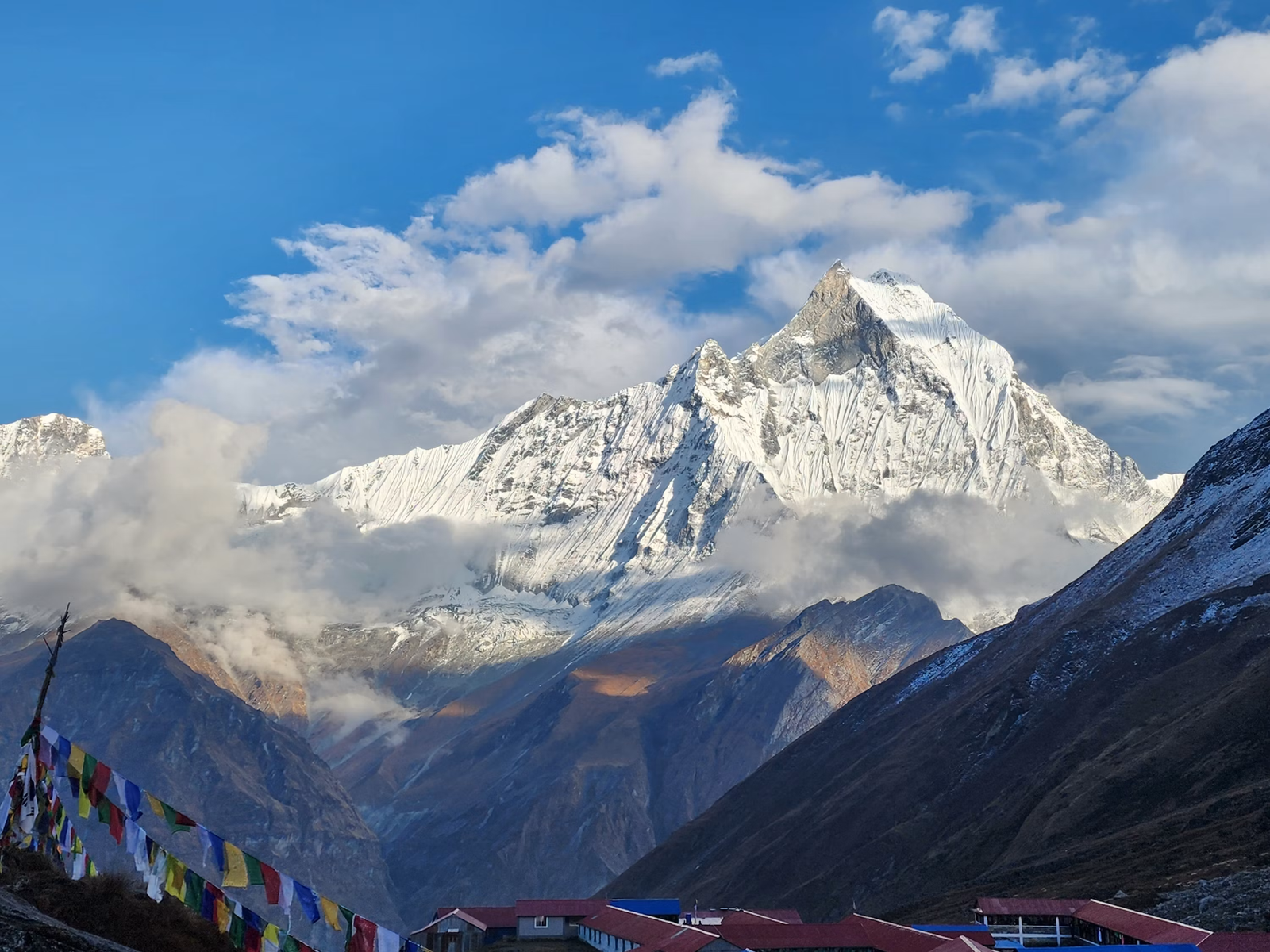
Introduction: Why Everest Base Camp Still Remains a Dream Adventure for Thousands of Travellers
There’s a moment on the trail, somewhere past Dingboche, when the noise of everyday life just… stops. No traffic, no notifications, nothing but wind moving across rock and the distant creak of a yak bell. You look up and Everest is right there, not on a postcard, not on a screen, just sitting on the horizon like it’s been waiting for you. That’s the pull. That’s why people still save for years, train for months, and fly halfway across the world for a patch of rocky ground at 5,364 meters that doesn’t even have a view of the summit itself.
And yet, for most people planning this trip, the excitement gets tangled up with confusion pretty fast. Do you hike the whole way in, sleeping in teahouses and walking for two weeks? Do you take a helicopter and see it all in a single unforgettable morning? Or do you commit to the full Everest Base Camp Trek (14 days), the classic itinerary that’s shaped how thousands of trekkers have experienced the Khumbu region?
If you’ve been going back and forth between the hike to Everest Base Camp trek and an Everest Base Camp helicopter tour, you’re not alone, and there’s no single right answer. It really comes down to your time, your fitness, your budget, and honestly, what kind of story you want to tell afterward. This guide walks through all three paths, the routes, the costs, the seasons, and the gear so you can figure out which version of Everest is the one meant for you.
Understanding the Everest Base Camp Experience: More Than Just Reaching a Location
What Makes the Everest Base Camp Trek So Special?
Here’s the thing people don’t quite expect until they’re actually there: Everest Base Camp isn’t really about the destination. It’s about everything that happens on the way to it. You pass through Sherpa villages where prayer flags snap in the wind and mani stones line the trail. You duck into centuries-old Buddhist monasteries where monks are still chanting the same prayers their predecessors did generations ago. You watch the landscape shift from pine forest to rhododendron groves to bare alpine rock, all within a week or so of walking.
The trail changes character almost daily. Day one out of Lukla feels busy and social, full of mule trains and fellow trekkers comparing notes. By the time you’re a week in, the crowds have thinned, the air has thinned too, and the whole experience turns quieter, more internal. That gradual shift, from chaos to stillness, is arguably the real heart of the Everest Base Camp trek, more than the finish line itself.
The Difference Between Trekking to Everest Base Camp and Flying by Helicopter
Walking in versus flying in are genuinely two different trips with the same name. Trekking means days of physical effort, sore legs, early mornings, and slow acclimatization, but also long conversations with guides and porters and the kind of deep cultural immersion that only comes from moving at walking pace. A helicopter tour, on the other hand, compresses that entire journey into a couple of hours, skimming over glaciers and peaks that would otherwise take a week and a half to reach on foot.
Neither is “better” in any objective sense. Trekking gives you connection. Flying gives you comfort and time back. Which one suits you probably says more about your travel style than anything else.
Hike Everest Base Camp Trek: A Complete Walking Adventure Through the Himalayas
Ask any guide in Namche why people keep choosing to walk instead of fly, and you’ll usually get some version of the same answer: it’s the only way to truly experience the Himalayas rather than just look at them from a distance. The Hike to Everest Base Camp is not only about reaching a famous destination; it is about the journey through ancient trails, mountain villages, and landscapes that slowly reveal the true character of the Everest region.
Walking allows your body to acclimatize naturally as you gain altitude gradually, which is honestly safer than rushing straight up by air. It also puts you face-to-face with the people who actually live in this region: tea house owners, yak herders, monks, and kids walking to school along the same paths trekkers use.
There’s also something special about the slow reveal. Each day brings a new version of the mountains, closer, bigger, and more dramatic than the last. The trail moves through forests, suspension bridges, Sherpa settlements, and high-altitude valleys where every step feels connected to the landscape. And then, after days of walking, when you finally round that last bend and see the fluttering prayer flags marking Everest Base Camp itself, something shifts. It’s not a dramatic view; honestly, the peak of Everest isn’t even visible from camp, but the feeling of having earned it on foot is hard to put into words.
Typical Route Overview of the Everest Base Camp Trek
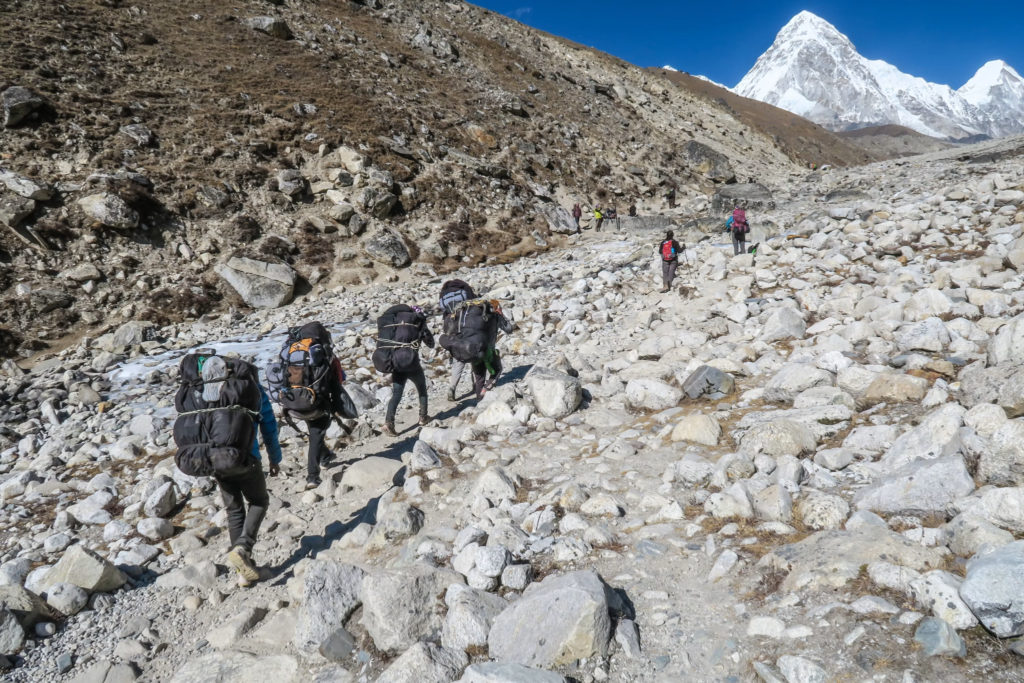
Lukla to Phakding: The Beginning of the Himalayan Journey
The trek usually kicks off with that famous short flight into Lukla, one of the more nerve-wracking airstrips in the world, followed by a gentle first day walking down toward Phakding. You’ll cross a handful of swaying suspension bridges strung with prayer flags, pass through pine forest, and get your first real glimpses of snow-capped peaks poking through the clouds. It’s an easy day, meant to ease you into the rhythm of trail life.
Namche Bazaar: The Heart of the Everest Region
Namche is where the trek really starts to feel like an expedition. Built into a natural amphitheater on the mountainside, this is the unofficial capital of the Khumbu, and most itineraries build in an acclimatization day here. You’ll wander through markets selling everything from trekking gear to yak cheese, hike up to viewpoints for your first proper look at Everest in the distance, and get a real sense of Sherpa culture and daily mountain life.
Tengboche to Dingboche: Entering the High Mountain World
Beyond Namche, the trail climbs toward Tengboche, home to one of the most important monasteries in the region, often with Ama Dablam looming dramatically behind it. From here the vegetation thins out fast, forests give way to scrubby alpine terrain, and the air gets noticeably thinner. This is where acclimatization really starts to matter, and most trekkers slow their pace, drink more water, and pay closer attention to how their body is handling the altitude.
Lobuche to Everest Base Camp: The Most Memorable Section
This stretch is where the trek gets real. The trail runs alongside the Khumbu Glacier, weaving between rocky moraine with the Himalayan giants, Nuptse, Lhotse, and Pumori closing in around you. Reaching Everest Base Camp itself is a strange, quiet kind of triumph. There’s no grand monument, just prayer flags, expedition tents (in climbing season), and the glacier stretching out ahead. Most people describe it as emotional in a way they didn’t expect, less a “we made it” celebration and more a stunned, grateful silence.
Kala Patthar Sunrise View: The Classic Everest Panorama
If Base Camp is the goal, Kala Patthar is often the actual highlight. This viewpoint, higher than Base Camp itself, offers an unobstructed sunrise view of Everest’s summit along with Nuptse and Lhotse lit up in gold and pink. It’s a brutal early start in freezing temperatures, but almost everyone who’s done it says the view was worth every shivering step.
Everest Base Camp Trek (14 Days): The Classic Itinerary for First-Time Visitors
Why the 14-Day Everest Base Camp Trek is Popular
The 14-day Everest Base Camp Trek has become something of a gold standard for first-timers, and there’s a good reason for that. It builds in enough rest and acclimatization days to reduce the risk of altitude sickness without dragging the trip out longer than most people’s holiday time allows. It also leaves a bit of breathing room to actually enjoy the journey instead of racing through it, stopping for tea, chatting with locals, and taking photos, rather than treating each day as a box to check.
Everest Base Camp Trek 14 Days Itinerary Overview
Day 1: Arrival in Kathmandu — You land, settle in, and get briefed on permits, gear checks, and what to expect over the coming two weeks. It’s also usually your last chance to grab any last-minute trekking gear from the shops around Thamel.
Day 2: Kathmandu to Lukla Flight and Trek to Phakding — The mountain flight into Lukla is an experience on its own, short, scenic, and a little hair-raising. From there, it’s a gentle walk down to Phakding to start settling into trail life.
Day 3–4: Trekking Towards Namche Bazaar — These days involve a steady climb through a forested trail, river crossings, and your first real taste of the altitude gain that defines this trek.
Day 5–8: Namche to Dingboche and Lobuche — This stretch covers the bulk of the altitude gain, moving through Tengboche’s monastery, into Dingboche, and eventually Lobuche, with acclimatization days built in along the way.
Day 9: Everest Base Camp and Return to Gorak Shep — The big day. You walk to Base Camp, take it all in, then head back to Gorak Shep for the night, tired but buzzing.
Day 10: Kala Patthar Sunrise and Trek Back — An early, freezing start rewards you with one of the best sunrise views in the world before you begin the long walk back down.
Day 11–13: Descending Towards Lukla — The descent feels almost like a different trek. The air thickens, the greenery returns, and your body starts to relax after days above 4,000 meters.
Day 14: Flight Back to Kathmandu — One last mountain flight, and then it’s back to the noise and warmth of the city, with two weeks of memories that don’t fade quickly.
Everest Base Camp Helicopter Tour: The Fastest Way to Experience Everest
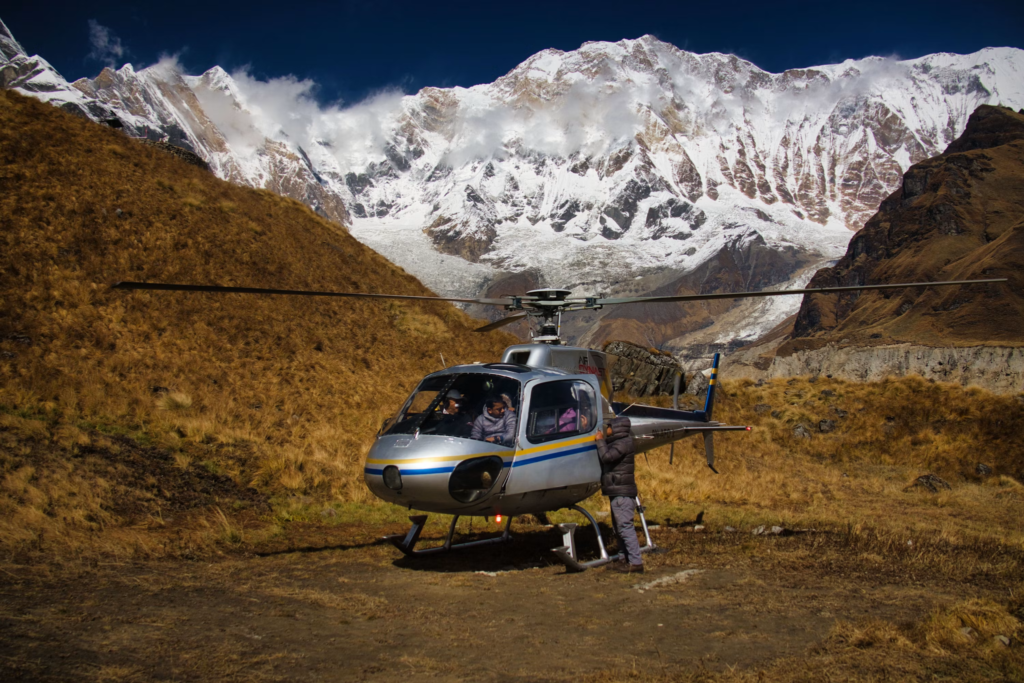
What is an Everest Base Camp Helicopter Tour?
An Everest Base Camp helicopter tour typically departs early morning from Kathmandu, flying you directly over the foothills and into the heart of the Khumbu. Most tours include a landing near Everest Base Camp or Kala Patthar, sometimes with a stop in Namche or a nearby lodge for tea and mountain views, before flying back to Kathmandu, all in a matter of hours rather than weeks.
Why Travellers Choose an Everest Helicopter Tour
Not everyone has two weeks of vacation to spare, and not everyone wants (or is physically able) to walk for days at altitude. That’s exactly where the helicopter option earns its appeal. It’s ideal for travellers on a tight schedule, older visitors, people recovering from injury, or honestly anyone who just wants to see Everest up close without the multi-day physical grind. And to be fair, the aerial views are genuinely stunning in a way that’s different from, not lesser than, the ground-level experience.
What You Can See During an Everest Helicopter Flight
From the air you get an almost surreal view of Mount Everest itself alongside the Khumbu Glacier snaking through the valley below. You’ll fly over Sagarmatha National Park, spot scattered Himalayan villages clinging to hillsides, and take in row after row of snow-covered peaks stretching toward the horizon. It’s a completely different way of understanding just how vast this mountain range really is.
Everest Base Camp Trek vs Everest Base Camp Helicopter Tour: Which One Is Better?
Trekking Experience
Trekking demands real physical effort, long days, tired legs, and thin air, but it pays you back with deep cultural connection and a slow, immersive sense of place. It also takes considerably more time, usually somewhere around two weeks when you factor in acclimatization.
Helicopter Experience
The helicopter route trades physical challenge for comfort and speed. You get an incredible aerial perspective on the entire region in a fraction of the time, though you miss out on the village life, the teahouse conversations, and that gradual, earned feeling of arrival.
Choosing Based on Your Travel Style
If you’re chasing adventure, want to really absorb the Himalayan way of life, and have the time and fitness to commit, trekking is where the real story is. If you’re working with limited time or physical constraints but still want that unforgettable view of Everest, the helicopter tour delivers it without compromise. Some travelers even combine both, trekking partway in and flying out, getting a taste of each world.
Best Time for Everest Base Camp Trek and Helicopter Tour
Spring Season (March to May)
Spring brings stable weather, clear mountain views, and the added bonus of rhododendron forests blooming along the lower trail sections. It’s consistently one of the most popular windows for both trekking and helicopter flights.
Autumn Season (September to November)
Autumn is often considered the sweet spot, with clear skies, comfortable daytime temperatures, and about as good as photography conditions get in the Himalayas. Many seasoned guides will tell you this is their favorite time of year on the trail.
Winter and Monsoon Considerations
Winter brings serious cold and snow that can make higher sections tough going, while monsoon season (roughly June to August) brings rain, cloud cover, and a real risk of flight delays into Lukla. Neither season is impossible, but both require more flexibility and patience than spring or autumn.
Everest Base Camp Trek Difficulty: Is It Suitable for Beginners?
Physical Requirements
This isn’t a technical climb, but it is a long walk at high altitude, often five to seven hours a day, over multiple days in a row. Some prior hiking experience helps, but it’s genuinely not mandatory. What matters more is showing up reasonably fit and mentally ready for a physical challenge that builds gradually over the trip.
Altitude Challenges and Acclimatization
Altitude is the real variable here, not distance or terrain. Thinner air affects everyone differently, which is why a slow, steady walking pace, proper hydration, and built-in rest days matter so much. Most well-planned itineraries, including the 14-day version, account for this by spacing out altitude gain rather than rushing straight up.
Everest Base Camp Trek Cost: What Should Travelers Expect?
Main Factors That Influence the Cost
Trek pricing tends to swing based on a handful of factors: how many days the itinerary runs, the standard of teahouse accommodation you choose, whether you hire a guide and porter (highly recommended), the required permits for the region, domestic flights to and from Lukla, and day-to-day food and personal spending on the trail. Longer, more comfortable itineraries with private guides naturally cost more than a bare-bones group trek.
Helicopter Tour Cost Factors
Helicopter pricing depends heavily on whether you’re booking a private charter or joining a shared group flight, the season you’re flying in, which route or landing points are included, and how many people are splitting the cost. Private charters offer more flexibility but come at a noticeably higher price than shared tours.
Packing List for Everest Base Camp Adventure
Essential Trekking Gear
A solid pair of broken-in trekking boots is non-negotiable, along with warm layered clothing, a proper down jacket for the colder nights, a four-season sleeping bag, and a comfortable backpack that won’t wreck your shoulders after day three.
Personal Items and Travel Essentials
Beyond the big gear items, don’t underestimate the small stuff: a reliable water bottle, strong sunscreen (the sun at altitude is no joke), good sunglasses, a basic first-aid and medicine kit, and a power bank, since charging outlets get scarcer and pricier the higher you climb.
How to Prepare for the Everest Base Camp Journey
Fitness Preparation Before Trekking
In the months leading up to your trip, regular walking, especially on hills or stairs, along with cardio work and some basic strength training, goes a long way. You’re not training for a marathon, but building stamina for consecutive long days does make a real difference in how much you actually enjoy the trek rather than just survive it.
Mental Preparation for High Altitude Trekking
Honestly, the mental side matters just as much as the physical. Patience, a flexible attitude when flights get delayed or weather shifts, and a willingness to just slow down and enjoy the process rather than chase the summit like a checklist item—these things shape how the whole experience feels. The Himalayas rarely go exactly to plan, and the trekkers who have the best time are usually the ones who roll with that.
Why Everest Base Camp Remains One of the World’s Greatest Mountain Adventures
At the end of it all, whether you spend two weeks walking through Sherpa villages or two hours flying above them, Everest Base Camp leaves a mark that doesn’t really fade. Travellers can choose the complete Everest Base Camp Trek (14 days) for the full immersive journey, take on the demanding hike Everest Base Camp trek route at their own pace, or opt for the comfort and efficiency of an Everest Base Camp helicopter tour. Each path leads to the same extraordinary place, just by a different road.
Years from now, most people don’t talk about the sore legs or the cold mornings. They talk about the silence up there, the way the mountains looked at sunrise, and the strangers who became friends over dal bhat at 4,000 meters. That’s the kind of memory Everest leaves behind, long after the boots are packed away.
FAQs About Everest Base Camp Trek and Helicopter Tour
1. How difficult is the Everest Base Camp Trek for beginners?
It’s absolutely doable for beginners with the right preparation. A gradual walking pace, proper acclimatization days, and reasonable pre-trip fitness make the trek manageable even for those without prior high-altitude experience.
2. How many days does the Everest Base Camp Trek usually take?
The classic Everest Base Camp Trek (14 days) remains one of the most popular choices, since it allows enough time for safe acclimatization while still leaving room to actually enjoy the journey rather than rush through it.
3. Is the Everest Base Camp helicopter tour worth it?
For travellers short on time or unable to commit to a multi-day trek, yes, it’s a great option. You still get to experience Everest and the surrounding peaks up close, just in a fraction of the time.
4. What is the best month to hike Everest Base Camp?
Spring (March to May) and autumn (September to November) are widely considered the best windows, thanks to stable weather, clearer skies, and generally comfortable trekking conditions.
5. Can I do the Everest Base Camp Trek without previous trekking experience?
Yes, plenty of first-timers complete it successfully every year. Previous experience helps, but it’s not essential as long as you prepare physically beforehand and choose an itinerary with sensible acclimatization built in.